Physical Address
304 North Cardinal St.
Dorchester Center, MA 02124
Physical Address
304 North Cardinal St.
Dorchester Center, MA 02124

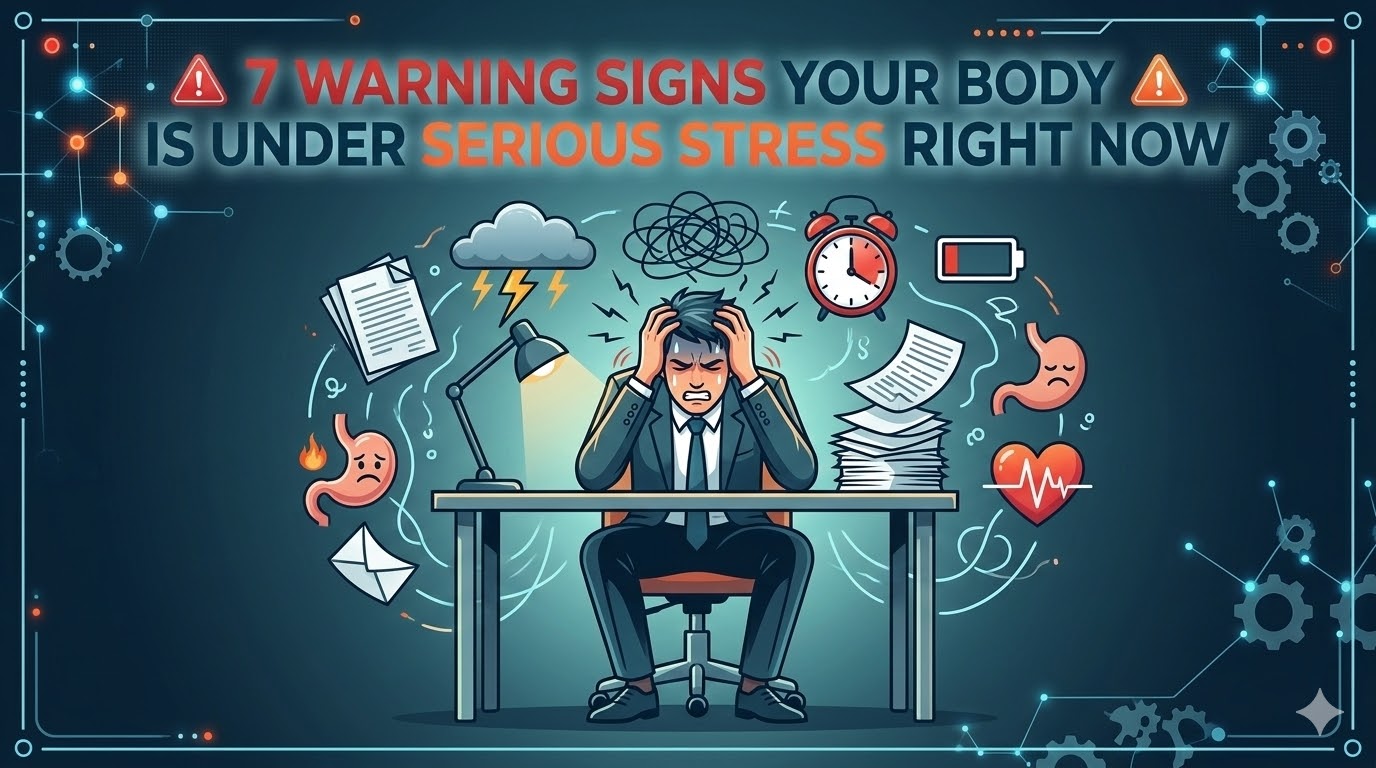
Most people think stress is just a feeling. Something you push through, ignore, and move on from. But your body tells a very different story — and it has been sending you signals you may have been ignoring for weeks or even months.
Chronic stress — stress that continues over an extended period — can increase your risk of cardiovascular disease, anxiety, and depression. The problem is that many people do not recognize it until real damage has already been done.
If you identify with three or more of the signs below, your body may be telling you something important. Do not ignore it.
This is one of the most overlooked signs of chronic stress, and one of the most common. You sleep seven or eight hours and still wake up exhausted. You drag yourself through the day running on coffee. By midafternoon, you can barely keep your eyes open.
When your body is under chronic stress, your adrenal glands continuously release cortisol and adrenaline — the hormones designed for short-term emergencies. When this response runs constantly, it drains your body’s energy reserves faster than sleep can restore them.
The result is a cycle of fatigue that rest alone cannot fix. If you have been tired for weeks despite sleeping enough, stress — not laziness or poor sleep habits — may be the real cause.
Unexplained stomach problems are one of the most direct physical signals of chronic stress, yet most people reach for antacids instead of addressing the root cause.
Stress affects the way food moves through your body, causing symptoms like nausea and indigestion. The increase in stomach acid that stress triggers can also produce heartburn or acid reflux. While stress does not directly cause ulcers, it can make existing ones significantly worse.
If you have been experiencing bloating, constipation, diarrhea, or persistent heartburn with no clear dietary cause, your gut may be reacting to stress rather than to what you are eating.
Notice that you seem to catch every cold going around? That you take longer to recover from illnesses that used to pass quickly? This is your immune system waving a red flag.
People under chronic stress are more susceptible to viral illnesses like the flu and the common cold, as well as other infections. Stress can also increase the time it takes to recover from an illness or injury.
Your immune system and your stress response share the same biological resources. When stress runs continuously in the background, your immune defenses are gradually lowered — leaving you more vulnerable every single day.
Do you carry tension in your shoulders, neck, or jaw without fully realizing it? Do you wake up with a stiff neck or headaches that seem to have no obvious cause?
Your muscles tense up to protect themselves from injury when you are stressed. They tend to release again once you relax — but if you are constantly under stress, your muscles may not get the chance to relax at all.
Over time this leads to chronic tension headaches, jaw clenching, neck stiffness, and back pain that no amount of stretching seems to fully resolve. If your body feels physically tight most of the time, stress is a very likely culprit.
If you find yourself forgetting things you would normally remember easily, struggling to concentrate on tasks, or feeling mentally foggy even when you are not tired — stress may be changing the way your brain functions.
Research has shown that chronic stress can cause structural changes in different parts of the brain, affecting cognition and memory. Chronic stress leads to an increase in cortisol that reduces the number of neurons and causes structural changes in the hippocampus — the part of the brain most responsible for memory and learning.
This is not just a feeling. Chronic stress physically alters brain structure over time. The earlier you address it, the more of that damage can be reversed.
Feeling your heart pound when you have not been physically active? Experiencing occasional shortness of breath at rest? These sensations are direct physical responses to elevated stress hormones.
When stress hormones are released, your heart beats faster and your blood vessels constrict to quickly distribute oxygen-rich blood to your body. Under chronic stress, this response continues far longer than it should.
Frequent or chronic stress can aggravate breathing problems and put you at risk for high blood pressure, heart attack, or stroke.
If you regularly feel your heart racing, experience chest tightness, or feel breathless without exertion, speak to a doctor — and take your stress levels seriously as part of that conversation.
This last sign is the one people most often dismiss as just “being in a bad mood.” But persistent irritability, a short fuse, low-level anxiety that does not go away, or feeling emotionally numb are all signs that your stress response has been running too long.
Stress involves changes affecting nearly every system of the body, influencing how people feel and behave. When cortisol stays elevated for weeks or months, it directly interferes with the brain chemicals responsible for mood regulation — including serotonin and dopamine.
If you have felt more on edge, more anxious, or more emotionally disconnected than usual over a sustained period, your body and mind are both telling you the same thing.
Recognizing chronic stress early is the most important step — because the longer it continues, the more physical and mental damage accumulates.
Start with the basics: prioritize sleep, reduce caffeine, move your body for at least 20 minutes daily, and identify the specific stressor in your life that is driving the response. If symptoms are severe or have been going on for more than a few weeks, speak with a healthcare professional.
Your body has been trying to tell you something. Now you know how to listen.
Related Articles:
Disclaimer: The content on Brandsprof.com is for informational purposes only and does not constitute medical advice, diagnosis, or treatment. Always consult a qualified healthcare professional before making any health decisions.