Physical Address
304 North Cardinal St.
Dorchester Center, MA 02124
Physical Address
304 North Cardinal St.
Dorchester Center, MA 02124

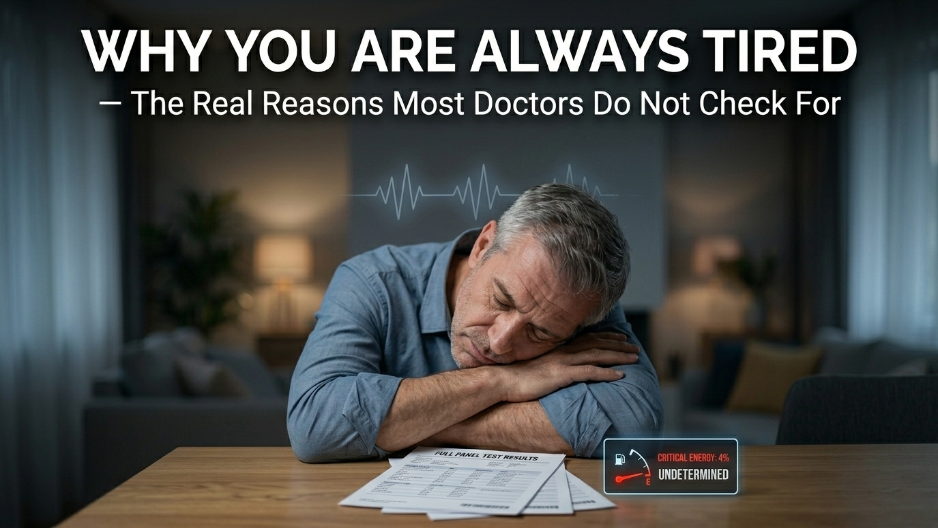
More than one-third of adults report feeling tired or fatigued most days. Most of them have been told the same things — sleep more, stress less, exercise more. They try all of it. And they are still exhausted.
The reason this advice often fails is that it does not address the actual cause. Persistent fatigue is almost never just about not sleeping enough. It is a symptom — and for most people it is pointing at something specific that has not yet been identified.
Here are the real reasons most commonly behind chronic tiredness in adults.
Thyroid hormones regulate metabolism, temperature, and energy levels. When they’re off, everything slows down. Hypothyroidism causes fatigue, cold sensitivity, and cognitive fog.
The thyroid is a small gland at the base of your neck. When the gland is underactive and the metabolism functions too slowly, you may feel sluggish and put on weight.
Hypothyroidism is one of the most commonly missed causes of fatigue because its symptoms develop gradually and mimic other conditions — including depression, ageing, and simply being busy. A simple blood test can confirm whether your thyroid is functioning correctly. If you have been tired for months and have not had your thyroid levels checked, that test is the first place to start.
Vitamin and mineral deficiencies, including B2, B3, B5, B6, B9, B12, C, D, iron, and magnesium, are among the most common causes of unexplained fatigue. Vitamin D deficiencies affect over 50% of the global population, and approximately 12.5% have iron deficiency anemia.
Iron deficiency in particular causes fatigue by reducing the amount of oxygen your blood can carry to your muscles and organs. The result is a persistent heaviness and lack of energy that sleep cannot fix — because the problem is not in your rest, it is in your blood. Vitamin B12 deficiency causes almost identical symptoms and is especially common in people over 50, vegetarians, and anyone on certain medications.
Sleep disorders are among the leading causes of chronic tiredness, affecting millions of adults and contributing to long-term health issues. The most significant is sleep apnea — a condition where breathing repeatedly stops during sleep, fragmenting it without the person being aware.
You may spend eight hours in bed, but that doesn’t always mean you’re getting quality sleep. Sleep disorders are a leading cause of daytime fatigue. Conditions like sleep apnea or insomnia disrupt the sleep cycle and prevent your body from fully recharging.
If you snore, wake up with a headache, or feel exhausted despite sleeping a full night, sleep apnea is worth investigating. It is very common, very treatable, and almost always goes undiagnosed for years.
High-sugar and processed foods can cause energy spikes followed by crashes. Most people are familiar with the post-lunch energy dip — that heavy, foggy feeling that arrives around 2pm and is usually solved by coffee or sugar, which begins the cycle again.
What fewer people realise is that this cycle is a sign of blood sugar instability, which is itself an early marker of insulin resistance. Afternoon fatigue is often a sign of blood sugar imbalance, poor sleep quality, or overuse of caffeine. If your energy crashes predictably after meals and is temporarily relieved by carbohydrates or caffeine, your blood sugar regulation deserves attention.
Sometimes fatigue stems from underlying medical issues that disrupt hormone balance, immune signaling, or cardiovascular function. These symptoms may be missed or misdiagnosed, especially in younger adults.
When the body is under sustained stress — not necessarily dramatic stress, but the constant background pressure of modern life — cortisol production runs continuously. Over time this depletes the body’s energy reserves faster than sleep can restore them. The result is fatigue that sleep alone does not fix because the underlying hormonal drain has not stopped.
Depression contributes to many physical symptoms. Fatigue, headaches, and loss of appetite are among the most common.
This is one of the most overlooked causes of persistent tiredness precisely because it does not always feel like sadness. Many people with depression do not feel particularly low — they feel flat, unmotivated, physically heavy, and chronically drained. If fatigue is accompanied by loss of interest in things you used to enjoy, difficulty making decisions, or a persistent sense that nothing feels rewarding, depression should be considered as a possible underlying cause.
Older adults take a lot of medications, and a lot of those medications tend to make people feel tired. Chief among these: certain antidepressants, antianxiety drugs, sedatives, antihistamines, steroids, and blood pressure and cholesterol medications.
This applies to people of all ages, not just older adults. If your fatigue began around the same time as a new medication, or has worsened since changing your dose, that connection is worth discussing with your prescribing doctor. Adjusting timing, dose, or switching medications often resolves fatigue without any other changes.
Even mild dehydration can leave you feeling sluggish. Research consistently shows that a fluid deficit of just 1 to 2 percent of body weight — the kind most people never notice because there is no dramatic thirst — measurably impairs concentration, mood, and physical energy.
Most adults are mildly dehydrated for much of the day simply because they drink coffee, tea, and other beverages rather than water, and do not compensate for the diuretic effect.
You should talk to your healthcare provider if you’re tired all the time. If your fatigue lasts longer than a few days, you’re having a hard time going to work or performing daily activities, or there isn’t a clear reason for your fatigue — reach out to your healthcare provider.
Ask specifically about thyroid function, iron levels, vitamin B12 and D levels, and — if you snore or wake unrefreshed — a sleep study. These are the most commonly missed causes of chronic fatigue, and each of them has a clear and effective treatment once identified.
Disclaimer: This content is for informational purposes only and does not constitute medical advice. Always consult a qualified healthcare professional before making any health decisions.