Physical Address
304 North Cardinal St.
Dorchester Center, MA 02124
Physical Address
304 North Cardinal St.
Dorchester Center, MA 02124

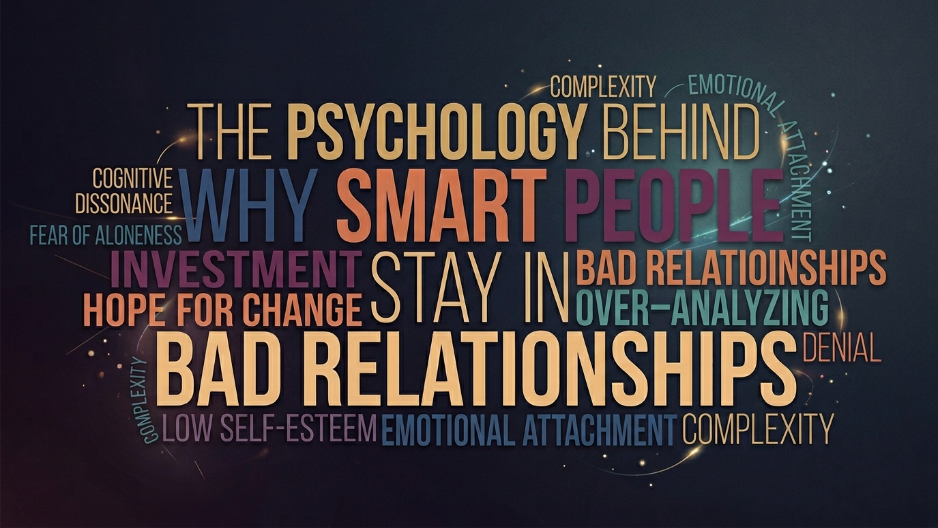
It is one of the most confusing things to witness — and even more confusing to live through. Someone clearly intelligent, clearly capable, clearly aware of what is wrong — and yet they stay. Month after month, sometimes year after year, in a relationship that is making them unhappy.
The common assumption is that staying in a bad relationship is a sign of weakness or low self-awareness. Psychology says the opposite is often true. The reasons highly intelligent people stay are specific, consistent, and deeply human — and understanding them is the first step toward changing the pattern.
Intelligence is a problem-solving tool. When a highly intelligent person encounters a relationship problem, their instinct is to apply the same analytical approach that works everywhere else in their life — read about it, research it, understand the root cause, find the solution.
Instead of following the gut instinct to walk away from harm, highly intelligent people may spend an excessive amount of time analyzing the dynamic, reading, researching, and using theories to understand their partner’s behavior — until they can see the childhood trauma they carry, how they are replicating wounds passed down through generations, and the insecurity beneath the control.
Understanding someone deeply is not the same as the relationship being good for you. But for highly analytical people, the act of understanding can feel like progress — even when nothing is actually changing.
A history of parentification — where a child is placed in the emotional caretaker role for their parents — can condition highly sensitive and intelligent adults to tolerate dysfunction as normal. They may genuinely not register their own suffering as a valid reason to leave, telling themselves: Everyone struggles. Maybe I am just not trying hard enough.
This is one of the most important findings from recent psychology research on this topic. Intelligent, empathic people who grew up managing others’ emotions often carry an unconscious belief that enduring difficulty in a relationship is simply what love requires.
There is a psychological concept known as the sunk cost fallacy — where the more you invest in something, the harder it is to let go, even if it is no longer serving you. That is why people stay in careers, cities, or partnerships long past their expiration date. Smart people are often raised to be high achievers. That means they internalize a message: Do not quit. Try harder. Push through.
The longer the relationship has lasted, the more this effect compounds. Two years of investment becomes three, then five — and the idea of leaving begins to feel like abandoning not just the relationship but everything that was put into it.
A meta-analysis in Psychological Bulletin links perfectionism to chronic dissatisfaction in relationships. Highly intelligent adults strive for flawless reasoning and control, even in intimate relationships. When a relationship falters, highly intelligent adults often internalize blame, overthink every detail, and retreat emotionally.
For a perfectionist, leaving a relationship is not just an ending — it is evidence of failure. And failure, for someone whose entire identity is built around competence and success, is almost unbearable. Staying, even unhappily, can feel psychologically safer than admitting the relationship cannot be fixed.
Intelligence and strength are not shields against manipulation and emotional abuse. In fact, abusers often target individuals with high intelligence and empathy, exploiting these traits to maintain control. The intense chemistry often present in the early stages of an unhealthy relationship can be incredibly alluring, making it difficult to recognize the manipulation at play. This initial phase can make it harder to leave even when warning signs become apparent.
A highly intelligent person can construct a compelling argument for almost any position — including arguments for why the relationship is actually fine, why their partner will change, or why the problems are largely their own fault.
Starting over sounds exhausting. The dating world feels daunting. The idea of being alone — after years of being a “we” — can trigger deep panic, even in the most outwardly confident people. But the truth is: you are not starting over from scratch. You are starting from wisdom.
This fear is not irrational. It is deeply human. But it is worth examining honestly — because the alternative to starting over is not staying in a good relationship. It is staying in an unhappy one.
Recognizing the psychological mechanisms at work is the beginning of change. The patterns described above are not character flaws — they are predictable responses from a mind that is trying, in its own way, to protect itself.
Therapy — particularly Cognitive Behavioral Therapy — is effective at identifying and interrupting these patterns. So is honest conversation with people who know you well enough to reflect back what they actually see.
The most important realization for most highly intelligent people in this situation is also the simplest: understanding why someone behaves the way they do does not obligate you to keep experiencing it.
Related Articles:
Disclaimer: This content is for informational and educational purposes only and does not constitute psychological or relationship advice. Please consult a qualified professional for personal guidance.